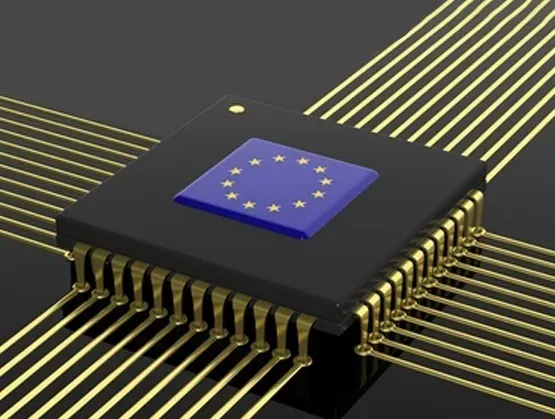
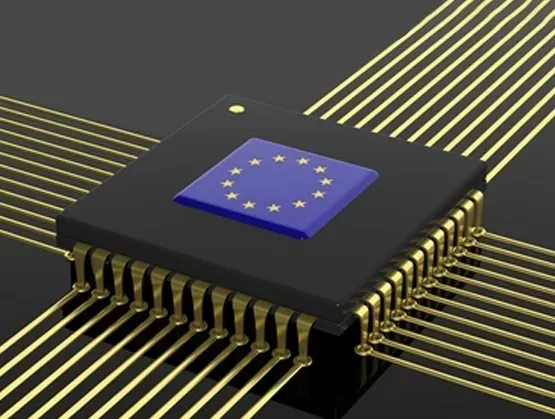
Last month, leading-edge equipment company ASML announced a surprising €1.3 billion investment into French AI company Mistral. The two companies touted stronger collaboration and the desire to “innovate faster together.” Even though some observers were skeptical, the commitment of one European tech champion into an aspiring European tech firm in the world’s hottest industry made plenty of sense. Writing for Bloomberg, columnist Lionel Laurent noted that such a deal was “a win for Europe’s tech ambitions” and that Mistral would have increased credibility in an AI race dominated by the United States and China.Europe’s tech prowess indeed lags behind its global rivals. ASML is, perhaps surprisingly (or not, depending on your vantage point), Europe’s largest tech giant by market cap at $406 billion. Europe boasts no tech goliaths the size of Amazon or NVIDIA and is often left following the lead of American tech firms as they chart the commercialization of new technologies. In the semiconductor industry, Europe’s chip manufacturers comprise only 9% of global market share today compared to 44% in 1990. Despite the bleak reality that Europe’s tech ecosystem finds itself in, there are reasons to believe that the nadir of recent years is slowly giving way to a more robust and respected innovation landscape. This piece will focus specifically on semiconductor manufacturing, demonstrating how Europe is taking its technological future seriously, and how, despite the challenges that remain, ultimately Europe is poised to succeed.Three Shocks – How We Arrived At This MomentThough Europe may not have been satisfied with the technological balance of power of recent decades, such an arrangement was largely tenable in a globalized world which prioritized free markets and international security in the aftermath of the Cold War. Though numerous cracks appeared in previous decades, the last five years in particular have given way to three shocks which have awoken European policymakers.The first, of course, was the COVID pandemic and the decimation of supply chains that caused a rapid seesaw in chip inventories – from extreme shortage to extreme oversupply – that companies in the automotive and industrial sector are just now recovering from. One senior German official was quoted as saying, “We lost 1-1.5% of our GDP in 2021 because of a lack of semiconductors – or about €40 billion.”Only two years later would come Russia’s unthinkable invasion of Ukraine, an unwelcome new reality which has forced Europe to reckon with its defense posture and supply chain. Semiconductors, again, play a key role here – Europe is reliant on China’s legacy chip production, meaning that low-tech chips often find their way into strategic weaponry.Lastly, a second Trump administration has surprised and rallied European governments to respond to “America first” rhetoric. Combined with the aforementioned shocks, recent events have convinced even Europe’s most ardent globalists that the continent must now invest where necessary in order to protect its borders and foster a competitive and sovereign technology ecosystem.The Underwhelming Response So FarFast forward to today where Europe’s COVID supply chain disruptions quickly gave way to ambitious policy in the form of the €43 billion European Chips Act intended to stimulate private investment to complement public capital and push Europe’s chip manufacturing market share to 20%. In the more than two years since the legislation’s passing, however, announced projects have underwhelmed. Big splashes from Intel and Wolfspeed have failed to materialize due to overambitious market expectations. Today, you can almost count the key recipients on one hand – STMicroelectronics, Infineon, TSMC, GlobalFoundries, Silicon Box, and amsOSRAM.Despite the sense of cynicism from some corners, however, understanding the slow progress to this point helps to unlock the right strategies moving forward. Already, many industry stakeholders and policymakers have questioned if attracting manufacturing full stop is the right strategy. Peter Wennink, former CEO of ASML, called the European Commission’s target to secure 20% of the global chip market by 2030 “totally unrealistic,” emphasizing that Europe’s current share is “8% at best.”Even if Wennink’s conclusion is too harsh, the tangible lack of investment over the past couple of years paired with the urgent need for Europe to maintain and grow its semiconductor prowess in response to concerns of security and sovereignty still demands a workable solution. The answer lies in building upon Europe’s very real strengths in the chip industry, narrowing the scope of investment to key strategic areas and in continuing to prioritize collaboration at all costs. How Europe Can Still Meet The MomentAny conversation about Europe’s contributions to the global semiconductor industry should begin with its unparalleled research ecosystem, and there’s no better place to start than with Belgium’s imec, one of the foremost research institutions chip companies depend on. Earlier this year, imec’s President and CEO Luc Van den hove emphatically reminded his audience that “you can’t make an advanced chip without European technology.” Van den hove’s point was that Europe should be leaning into its strengths as a research powerhouse rather than trying to chase leading-edge nodes. The FAMES Pilot Line is one example of what that research prowess looks like in practice. Funded with €830 million via the EU Chips Act, the initiative brings together Europe’s leading research institutions (imec, Fraunhofer, CEA-Leti, and Tyndall) to develop open access to several key microelectronic technologies, with a strong emphasis on low-power applications for markets such as automotive, IoT, and mobile devices. Central to FAMES is its “open access” policy which enables European manufacturers to use its pilot line to develop prototypes and evaluate next-generation technologies. Chip companies without any manufacturing presence in Europe stand on the outside looking in, risking technological inferiority.While Europe flexes its academic prowess, however, it is increasingly recognizing its vulnerability when it comes to more mature-node technologies and production. Investments such as ESMC – TSMC’s joint-venture with regional champions Bosch, Infineon, and NXP – are a good start, but Europe fundamentally needs more mature tech, particularly for defense. In a recent piece for Foreign Affairs Magazine, authors Chris Miller and John Allen argued that Europe indeed has a promising semiconductor opportunity ahead of it, but only if it enhances cooperation with the United States. The fact that the two regions have similar goals and geopolitical rivals is an opportunity for Europe to attract greater chip investment from U.S. firms looking for Europe’s leading research capabilities and defense customers. The authors implore European policymakers to:“ensure that their chip companies can capitalize on the surge in defense spending by investing more in new defense technologies and fostering connections between large chip firms and small defense start-ups. European chip companies that have previously focused on civilian markets must realize that the defense industry, and particularly the drone sector, will drive growth and technological change.”Targeting these investments intelligently remains to be seen, but there can be no doubt that Europe is taking the funding challenge seriously. Germany, France, Italy, and the United Kingdom have all raised their defense spending as a percentage of national income, with Germany announcing plans to double its defense spending to €650 billion over the next five years.Securing Position In Europe's Semiconductor RenaissanceEurope’s semiconductor future will not be built by mimicking Taiwan’s fabrication prowess or outspending America’s subsidies. Instead, success lies in doubling down on what Europe already does exceptionally well – world-class research infrastructure, strategic positioning in mature and specialty nodes, and an increasingly robust defense industrial base hungry for secure semiconductor supply. As European chip subsidies continue and defense budgets surge across the continent and geopolitical fractures deepen, the strategic calculus is clear – semiconductor companies without meaningful European capacity risk ceding ground to competitors who recognized the shift early. The question is no longer whether Europe matters in the global chip ecosystem, but rather which companies will position themselves to capitalize on its inevitable growth.About Stephen M. RothrockStephen Rothrock founded ATREG in 2000 to help the world’s advanced technology companies divest and acquire infrastructure-rich manufacturing assets, including wafer fabs (front- and back-end) as well as MEMS, solar, display, and R D facilities. Over the last 25 years, his firm has completed 40% of all global operational wafer fab sales in the semiconductor industry, a total of 60 transactions. Recent global acquisitions and dispositions have involved Allegro MicroSystems, Bosch, Elmos, Fujitsu, GlobalFoundries, IBM, Infineon, Japan Display (JDI), Micron, NXP, onsemi, Qualcomm, Renesas, Sony, Texas Instruments, and VIS to name just a few. Prior to founding ATREG, Rothrock established Colliers International’s Global Corporate Services initiative and headed the company’s U.S. division based in Seattle, WashBefore that, he worked as Director for Savills International real estate brokerage in London UK, establishing their global corporate services platform serving large multinationals, many of whom were leading technology companies. Rothrock also served on the UK-listed property company’s international board. He spent four years near Paris, France working for an international NGO. Rothrock holds an MA degree from the University of Hull, UK and a BA degree in Business Commerce from the University of Washington in Seattle, USA.