downloadGroupGroupnoun_press release_995423_000000 copyGroupnoun_Feed_96767_000000Group 19noun_pictures_1817522_000000Member company iconResource item iconStore item iconGroup 19Group 19noun_Photo_2085192_000000 Copynoun_presentation_2096081_000000Group 19Group Copy 7noun_webinar_692730_000000Path
Skip to main content
Default Banner Image

Jessica Gomez

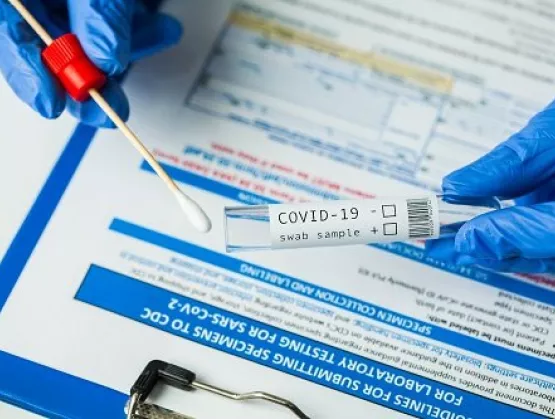
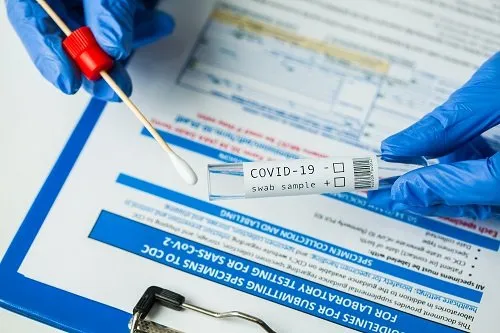
While the world awaits a working vaccine to protect us from COVID-19, we need to employ all available tools to help curb the spread of this novel virus. On the one hand, it’s remarkable that we’re relying on the same low-tech tools that our forebears used to moderate the pandemic of 1918 — social isolation, mask-wearing and hand-washing. On the other, we have access to numerous technologies that hadn’t even been invented a century ago. Among the most important is molecular diagnostics for advanced testing.While we continue to face a scarcity of test kits in the U.S., the majority of commercially available genetic tests for COVID-19 are reliable, so accuracy is rarely the problem. We’re hampered instead by the timeliness of getting the results and by the level of detail the tests provide.To save more lives and reduce the burden on our healthcare system, we need point-of-care genetic tests that deliver accurate results rapidly, telling us right away who’s positive and who’s negative. We also need pertinent test data shared as quickly as possible via secure networks to improve our ability to track surges in infections. These are two of the challenges that emerging biotech companies are pivoting to embrace. RT-PCR: The Gold Standard in Accuracy, Not SpeedWhen I read about some of the high-quality COVID-19 tests on the market – such as Abbott’s, which detects positive results in as little as five minutes — I am awed by how far we’ve come since the last global pandemic. The core enabling technology in test platforms such as Abbott’s uses the molecular genetics technique real-time reverse polymerase chain reaction (RT-PCR). The vast majority of rapid tests administered today in hospitals and other clinical settings use RT-PCR.While accuracy is high for RT-PCR tests, getting tests results to patients is slow because test samples are sent to the lab for analysis. That lab could be located in a hospital, in a doctor’s office, or in an urgent care facility run by a large company such as Quest Diagnostics. Regardless of location, each lab must have an RT-PCR machine to read the test results. Plus each RT-PCR machine costs thousands of dollars, and requires a technician to read the results, , factors that have limited the proliferation of these machines.New COVID-19 cases are still surging in parts of the U.S., India and Brazil, and in some areas, we’re seeing instances of inundated labs, with test results coming back in one to two weeks. That’s not fast enough for a virus this contagious. We need to get accurate tests results to healthcare providers, public officials, and patients as close to real-time as possible. To meet this goal, we need to apply molecular-diagnostic techniques to new types of biosensors that deliver test results at the point of care in minutes through platforms that send that data in near real-time to the cloud. This essential information will allow public health institutions, states, cities and other key stakeholders to identify and mitigate emerging hot spots of disease.Over the past seven months, we’ve had the privilege of working with a handful of biotech companies that have pivoted to develop rapid point-of-care molecular diagnostics that target COVID-19. One of these, HEMEMICS, is developing a handheld molecular diagnostic test platform that could be administered by healthcare workers in triage settings such as ambulances, emergency rooms, community clinics and makeshift hospitals. As a true point-of-care test platform, it would deliver results onsite, without requiring the transfer of test samples to a lab. “We’re aiming to redefine point-of-care testing for COVID-19,” said John Lehman Warden, Jr., CEO and co-founder, HEMEMICS. “Unlike the most common type of on-site test — the lateral flow monitor — our test isn’t waiting for osmotic reactions to occur. We place the sample from a quick nasal swab or a drop of blood right on-chip, and binding takes place within a standing drop of fluid. That makes our platform fast, delivering results in about 60 seconds. Plus it simplifies sharing test results with other communities of interest, such as public health departments and municipalities, because it’s Bluetooth-enabled and supports cloud-based management networks.”As its foundry partner, we’re collaborating with HEMEMICS as it continues to refine its biochip’s sensitivity for both antibody and antigen testing of SARS-CoV-2. Once HEMEMICS is satisfied, it will move forward with the U.S. Food and Drug Administration’s (FDA’s) emergency use authorization (EUA), which it hopes will bring the HEMEMICS platform into the hands of the millions of people who stand to benefit.As we head into the fall and winter months, we’ll need both rapid, connected point-of-care biosensor test platforms such as HEMEMICS’ and high-accuracy RT-PCR tests to fight COVID-19 effectively. And at their root, we’ll have MEMS and biosensors to thank. For more information on Rogue Valley Microdevices’ biosensor solutions, please contact the company at [email protected] or visit its website. As founder and CEO of Rogue Valley Microdevices, Jessica Gomez has created a world-class precision MEMS foundry in the heart of Southern Oregon. Integral to her role as CEO, Gomez practices a business philosophy of offering best-in-class process technology and R D expertise to customers to help them achieve the highest quality and reliability in their products. Gomez plays an active leadership role within and beyond the technology industry. She is a board member of the prestigious SEMI Board of Industry Leaders, she was the first executive selected for Spotlight on SEMI Women, and she is chairman of the Oregon Institute of Technology Board of Trustees.Rogue Valley Microdevices is a longtime member of MEMS Sensors Industry Group (MSIG), a SEMI technology community that enables the MEMS and sensor industry to address common challenges, innovate and accelerate business results.

Read More
The BioMEMS market is becoming increasingly diverse, encompassing gas and pressure sensors, ultrasound, specialized biomedical sensors, and other types of MEMS and microfluidic chips used for drug delivery and analytical applications. The BioMEMS market is also growing steadily: Research firm Yole Développement predicts that BioMEMS will grow at 14.9% CAGR from 2017-2023, reaching US$6.9B by 2023.1 As a high-value market, BioMEMS is worth pursuing as long as you can manage the complexities of manufacturing, including a sometimes-fragmented supply chain. Fortunately, the MEMS manufacturing ecosystem is evolving to accommodate the needs of companies that are in the process of commercializing BioMEMS-enabled products. Understanding the ecosystem’s shifting dynamics will help BioMEMS to flourish in this promising while often-challenging market segment.Unique Product, Unique ProcessIn the world of semiconductor manufacturing, it is routine for a fab to manufacture hundreds of different device designs using just a handful of process nodes. Semiconductor foundries share their design rules with customers, who then develop the mask set accordingly, literally adapting their designs to fit the rules for manufacturing on one of the foundries’ process nodes. In stark contrast, most MEMS devices cannot conform to the level of standardized manufacturing processes that work so well for semiconductors. Rather, MEMS challenges us to develop individualized processes for each device. It’s one product, one process.New BioMEMS designs generally emerge from either corporate R D or academia, two groups that approach specialized MEMS foundries such as ours when they’re entering pilot or low-volume production. Today successful commercialization depends on open, accurate communication and close collaboration. MEMS foundries must work side-by-side with designers to ensure that designs are based on real-world manufacturing process technologies. This highly customized manufacturing model makes it very difficult to support future demand for the groundswell of diverse BioMEMS devices that are in development. If we want to handle this upward trajectory of BioMEMS, we’ll need to adapt.Change the ModelWhile most existing MEMS foundries currently support a wide variety of devices types, I predict that market forces will cause our foundries to move toward specialization. Some companies will specialize in what they already do best, e.g., inertial sensors for the automotive industry. Others might choose to develop their foundry business around a purpose-built facility, which, for example, only manufactures microfluidics or magnetic devices. Larger enterprises might opt to build captive foundries that are designed to serve their specific needs. Get Creative: Combine, CollaborateSatisfying the thriving market for BioMEMS will require creativity. One idea: combine different disciplines of the manufacturing process at the same foundry. For example, we could have a biochemistry fab and a MEMS fab under the same roof, or we could have a MEMS fab and a packaging facility in one building. While these approaches may not yet exist outside of academia, necessity may drive them to fruition.It will also require heightened strategic collaboration, a process that has already begun. To support both large volumes and greater diversity of devices, some MEMS foundries are building cooperative relationships with former competitors. Think of it as a restructuring of the supply chain.Embracing the special challenges of BioMEMS manufacturing is worth our investment in time and resources. We need to step back, individually and collectively, to understand where each of the existing MEMS foundries fits into the new supply chain so we can leverage our strengths. We can start by forging stronger alliances for tech transfer. Once we more freely share information as we engage in joint product development — involving technology teams who are more connected and less guarded — we will expedite tech transfer and manufacturability.While we are unlikely to achieve the same level of standardization that has enabled the semiconductor industry to reach its great heights, as long as we evolve to meet demand, we will grow together and prosper.To learn more about this topic, meet with Jessica Gomez at the upcoming SEMI-MSIG MEMS Sensors Executive Congress (October 22-24, 2019 in Coronado, Calif.) or email her: [email protected][1] “BioMEMS Emerging Non-Invasive Biosensors: Microsystems for Life Sciences Healthcare 2018 Report,” Yole Développement, https://yole-i-micronews-com.osu.eu-west-2.outscale.com/uploads/2018/08/Sample-BioMEMS-Non-Invasive-Sensors-Microsystems-for-Life-Sciences-Healthcare-2018-.pdf As founder and CEO of Rogue Valley Microdevices, Jessica Gomez has created a world-class precision MEMS foundry and wafer fab in the heart of Southern Oregon. Integral to her role as CEO, Ms. Gomez practices a business philosophy of offering custom design, best-in-class process technology and R D expertise to customers, to help them achieve the highest quality and reliability in their products.In 2018, Ms. Gomez was selected for the prestigious SEMI Board of Industry Leaders. SEMI also recognized her in its first Spotlight on SEMI Women, which honors accomplished women in the global microelectronics industry.Prior to founding Rogue Valley Microdevices in 2003, Ms. Gomez honed her experience in semiconductor processing and production management through positions at Standard Microsystems Corporation, Integrated Micromachines and Xponent Photonics.For more information, visit: https://roguevalleymicrodevices.com/Rogue Valley Microdevices is a longtime member and supporter of SEMI-MEMS Sensors Industry Group, which connects the MEMS and sensors supply network, allowing members to address common industry challenges and explore new markets.
Read More
With one of the oldest and largest public education systems in the developed world, how well does the US public education system serve the global electronics industry? Public education in the US has had time on its side. In 1635 the Boston Latin School became the first public school in the US. Boston Latin was originally a boys-only secondary school that taught Greek, Latin and the humanities. It wasn’t until 1918, however, that the US government required all children to obtain at least an elementary-school education – available to them through free public schools. As public education increasingly served the masses rather than just the elite, a balance of humanities, mathematics and science began to replace the classics.While free public education in the US got a comparatively early start, most American students score lower in science and math than students in many other developed nations. According to a 2017 Pew Research Study, 15-year-old American students ranked 24th in the world in international standardized age-group science testing and 38th in the world in standardized mathematics testing. While test scores are just one measure of proficiency, do they in some way reflect a lack of motivation to study science and math because of students’ unfamiliarity with STEM careers? Source: Pew Research. See article. Make STEM RelevantIf we want the US to remain a leader in the global electronics industry, we need to pay attention to the disconnects between academics and workforce development. We must help show students at an early age that STEM careers can be exciting, creative and fulfilling, and that math and science are essential to STEM.Ways to Get InvolvedWhether you work for a large publicly traded electronics manufacturer, an equipment or materials supplier, a foundry or a startup, you can take action to support student engagement in STEM. Here are a few ways to get involved:Participate in Community Programs One fun way to inspire budding technologists is to sponsor one of the FIRST programs for students. These age-segmented competitive programs range from FIRST LEGO League, Jr. Challenge for six-ten year-olds to FIRST Robotics Challenges for high school and college students, giving you the opportunity to sponsor a team or even to coach.Our company sponsors Team TNT, a Southern Oregon-based team that placed among the world’s top high school robotics teams at the spring 2018 world championships. We also brought two members of Team TNT to SEMICON West 2018, where they attended SEMI’s three-day High Tech U and presented their insights on building their FIRST Challenge robot at the Smart Workforce Pavilion. Margaux Quady (L) and Matthew Mills (R), Team TNT members, presented at SEMI’s Smart Workforce Pavilion at SEMICON West (Rogue Valley Microdevices) Concerned about the dearth of girls interested in STEM — and the small numbers of women in engineering careers? Look for your local equivalent of the Advocates for Women in Science, Engineering, and Math (AWSEM) Symposium, a day-long program for middle school girls. One of our engineers, Jennifer Devin, gave a hands-on workshop on deconstructing smartphones to showcase the silicon chips inside them. If you cannot find something like AWSEM, check out national programs such as the Society for Women Engineers (SWE)’s SWENext program for girls ages 13-18 as well as Girl Powered.Partner with Local SchoolsYou would be surprised at the opportunities to present what you do in the classrooms of school-age children. Take after Allyson Hartzell, managing engineer at Veryst Engineering in Needham, MA. Allyson speaks with students in her local elementary schools of Somerville and Cambridge, Massachusetts because she thinks that we must reach younger children to get them excited about STEM learning. “Waiting until middle school or high school to help students visualize the real-world appeal of STEM careers is just too late,” said Hartzell. “I’ve had amazing experiences working with local elementary-school students. Students become engaged when you show them real-world examples such as electron micrographs of MEMS.”Many middle schools and high schools also look to their communities to provide tutors in STEM subjects. Check with the community liaison at your local school to get started.Engage in Internship ProgramsInvolvement doesn’t stop in the K-12 grades. Seek out a local university’s internship program and hire some interns in that program to work at your company. The interns will gain valuable applied experience in your environment, and you might find young engineers who would love to join your company after they graduate. Oregon’s MECOP, an engineering-specific internship program founded on close industry-university collaboration, has been amazing for our recruitment. Some of our finest engineers were once in the MECOP program, including our engineering manager.Anything you do to get involved in inspiring coming generations of students to explore STEM — no matter how small your action — will make a positive difference in helping US students become better prepared to enter a technology-focused workforce. Through collaboration and creativity, we can help US companies keep the global electronics industry moving toward greater innovation. Jessica Gomez, CEO and co-founder of Rogue Valley Microdevices, entered the semiconductor manufacturing field in 1998 at Standard Microsystems Corporation of Hauppauge, New York where she acquired valuable knowledge in both semiconductor processing and production management. Jessica also held positions at Integrated Micromachines and Xponent Photonics prior to co-founding Rogue Valley Microdevices in 2003. As head of a technology company, Jessica recognizes the criticality of workforce development – and has become an advocate of STEM education. Rogue Valley Microdevices supports STEM initiatives for middle-school girls, a competitive robotics team for high school students, and a college internship program specifically for engineers.Expanding her energies beyond the company she co-founded, Jessica is also applying her passion for change to politics. She is currently campaigning for the Oregon State Senate.For more information, visit Rogue Valley Microdevices.
Read More